
October 3, 2024
Road Freight
Sea Freight
For those working in logistics or regularly organising shipments and freight, understanding specific terms and their significance can be useful for efficient operations. One such term that often surfaces in the logistics industry is drayage.
But what is drayage? This article will explain the meaning of drayage, its importance, and how drayage companies play a pivotal role in the supply chain.
What is drayage?
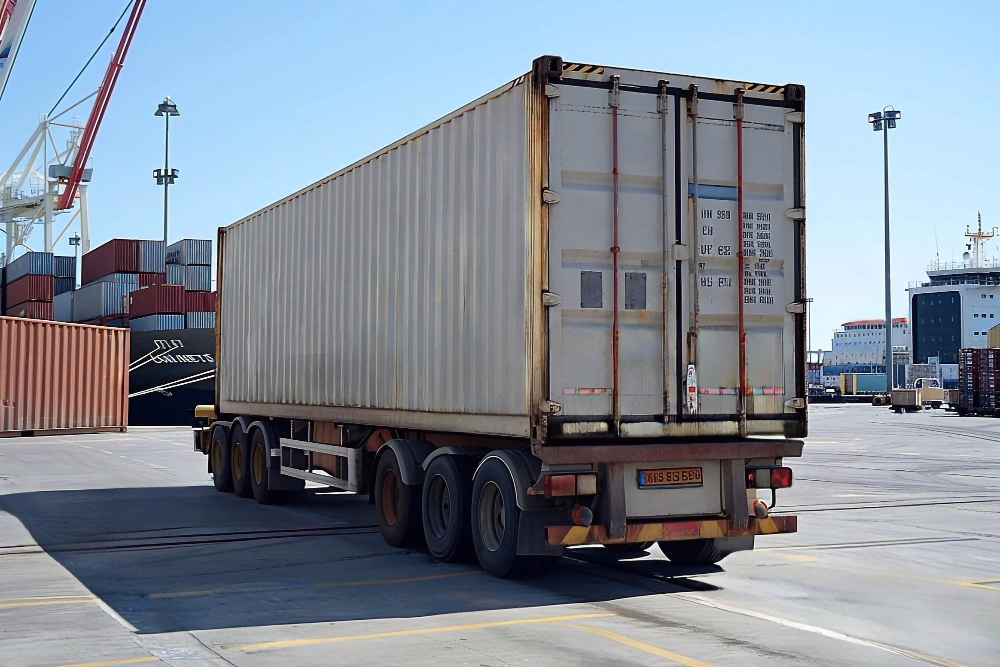
Drayage refers to the transportation of goods over a short distance, typically within the same region, state or county, or between two close locations such as a port and a warehouse. The term is most commonly used in the context of container shipping and intermodal transport, where goods need to be moved from one mode of transport to another, like from a ship to a truck or from a rail terminal to a distribution centre.
The term originates from the word ‘dray’, which historically referred to a cart or wagon used to haul goods. Today, drayage involves the use of trucks and specialised equipment to handle the movement of cargo containers.
The drayage process
The drayage process is an essential component of the broader logistics and supply chain management system. It involves several key steps:
- Pickup: The container is picked up from the port or rail terminal.
- Transport: The container is transported over a short distance to its next destination, such as a warehouse or distribution centre.
- Delivery: The container is delivered to the final destination, where it can be unloaded and its contents distributed accordingly.
The importance of drayage in logistics
Drayage plays an important role in ensuring the seamless transition of goods between different transportation modes. Let’s explore how drayage impacts logistics, and why it’s so important:
Facilitating intermodal transport
Drayage services allow for the efficient transfer of containers between ships, trucks, and trains. This intermodal transport system optimises the movement of goods, reducing costs and improving delivery times.
Supporting Just-In-Time (JIT) deliveries
In the era of just-in-time inventory management, timely delivery of goods is vital. Drayage ensures that containers are moved quickly and efficiently to their next destination, supporting JIT strategies and minimising inventory holding costs.
Enhancing port operations
If you’ve ever been to a port, you know they’re not the quietest of places. They are bustling hubs of activity and efficient drayage services help alleviate congestion by swiftly moving containers out of the port and to their next destination. This enhances the efficiency of port operations and reduces turnaround times for ships.
Reducing environmental impact
By optimising the movement of containers and reducing the number of trips needed, drayage services contribute to lower emissions and a reduced environmental footprint. This is particularly important in urban areas where air quality and congestion are major concerns.
Types of Drayage
There are several types of drayage, each serving a specific purpose within the logistics chain.
Pier drayage
Pier drayage involves transporting containers from a port to a nearby rail yard or warehouse. This is a common type of drayage, especially in major port cities.
Inter-carrier drayage
Inter-carrier drayage involves moving containers between different carriers, such as from a ship to a rail terminal. This type of drayage is essential for maintaining the continuity of intermodal transport.
Door-to-door drayage
Door-to-door drayage refers to the direct transportation of containers from the port or rail terminal to the consignee’s premises. This is often used for high-value or time-sensitive shipments.
Challenges in Drayage
While drayage is a critical component of the logistics chain, it’s not without its challenges. Some of the key issues faced by drayage companies include:
Port congestion: Port congestion can lead to delays in the pickup and delivery of containers. Drayage companies must navigate these challenges by coordinating closely with port authorities and other stakeholders.
Regulatory compliance: Drayage operations are subject to various regulations, including those related to emissions, safety, and labour. Staying compliant with these regulations can be complex and requires constant monitoring.
Equipment availability: The availability of suitable equipment, such as chassis and trucks, can impact the efficiency of drayage operations. Drayage companies must manage their fleets effectively to ensure timely service.
Labour shortages: The logistics industry often faces labour shortages, particularly for skilled truck drivers. Addressing this challenge requires investment in recruitment, training, and retention strategies.
Drayage meaning in the broader context
Understanding the meaning of drayage within the broader context of logistics is essential to appreciate its impact on the supply chain. Drayage is not just about moving containers over short distances; it’s about ensuring the seamless flow of goods from origin to destination. This requires careful planning, coordination, and execution at every step.
The future of drayage
The drayage industry is evolving rapidly, driven by technological advancements and changing market dynamics. Some key trends shaping the future of drayage include:
- The use of automation and robotics in drayage operations can enhance efficiency and reduce labour costs. Automated guided vehicles (AGVs) and robotic systems can handle container movements with precision and speed.
- Digital platforms and tools are transforming the way drayage services are managed. From real-time tracking and monitoring to advanced analytics, digitalisation enables better decision-making and improved service levels.
- As environmental concerns take centre stage, drayage companies are increasingly adopting sustainable practices. This includes investing in fuel-efficient vehicles, exploring alternative fuels, and implementing green logistics strategies.
- Collaboration between drayage companies, ports, and other stakeholders is essential for addressing common challenges and improving service quality. Collaborative networks facilitate information sharing, resource optimisation, and better coordination.
Drayage is a fundamental component of the logistics and supply chain industry, allowing for the efficient movement of goods over short distances. From facilitating intermodal transport to supporting just-in-time deliveries, drayage services are indispensable for modern logistics. However, the industry isn’t without its challenges; port congestion, regulatory compliance, and labour shortages (to name a few) which require innovative solutions and effective management.
Here at AGI, we understand the critical role that drayage plays in the logistics chain. Our experienced team and state-of-the-art technology allow your goods to be transported efficiently and reliably. Contact us today to learn more about our drayage services and how we can support your logistics needs. And for all of the latest AGI news, don’t forget to follow us on LinkedIn and Facebook!